
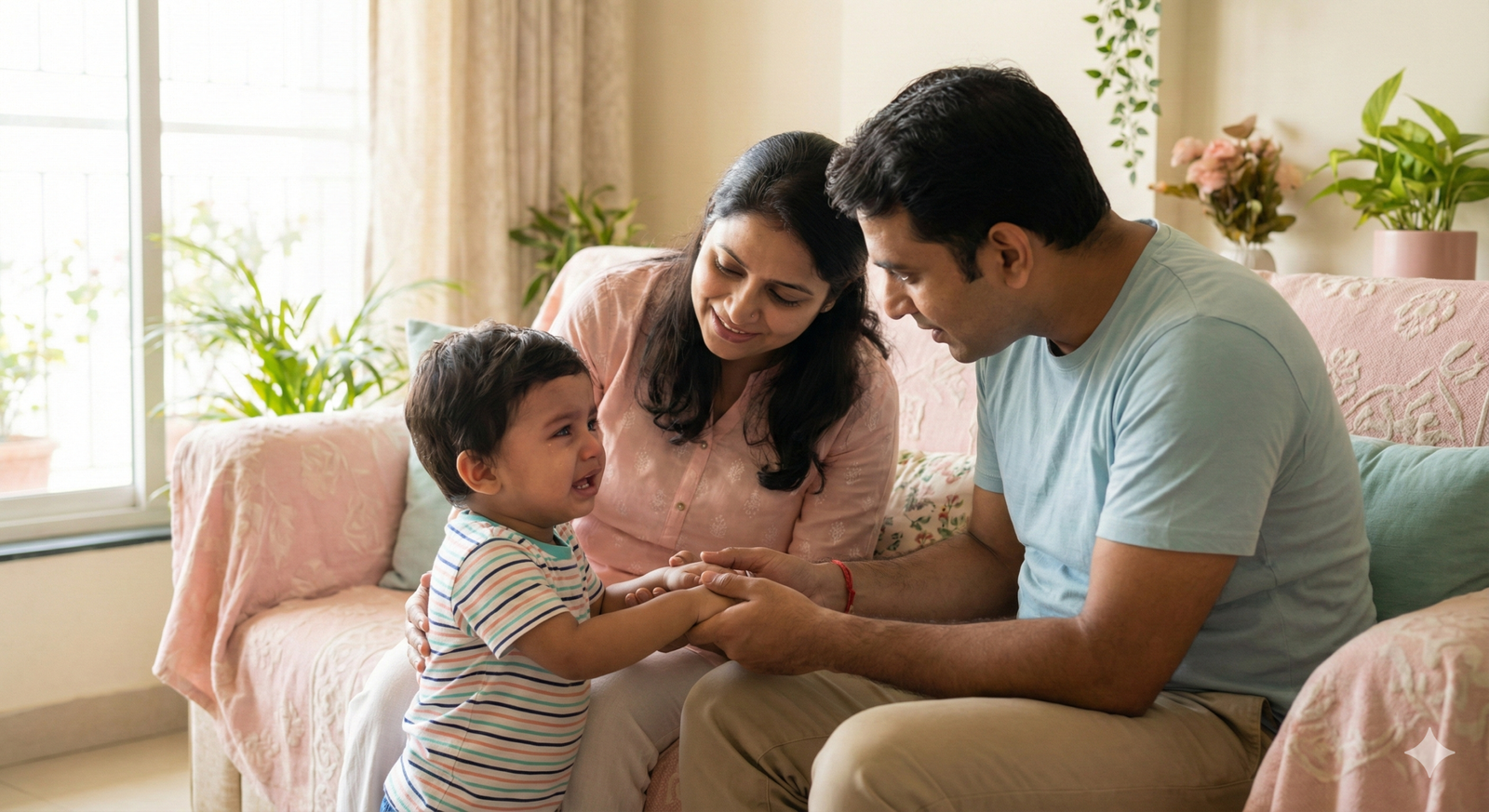
Why Staying Calm Feels So Hard as a Parent
“I love my child more than anything, but sometimes I just lose it.”
If you have ever felt this way, take a moment to breathe. You are not alone. Many parents go through this, even though it is not often discussed openly.
We start the day hoping things will go better, but sometimes we still end up snapping over spilled milk, unfinished homework, or a child refusing to put on shoes before 8:00 AM.
Modern parenting feels like a pressure cooker. We juggle demanding jobs, screen time struggles, worries about school, and the urge to compare ourselves to perfect-looking families on social media.
In India, these pressures are compounded by specific cultural stressors such as academic demands placed on children, the expectations of living in joint families, and societal pressure encapsulated in the phrase ‘log kya kahenge’ (what will people say).
These additional layers make it even more challenging for parents to maintain calm and patience in everyday situations.
Every parent should know this: calm parenting is a skill you can learn, not just something you are born with. With awareness, practice, and self-compassion, anyone can become a more relaxed and patient parent.
What Does It Mean to Be a Calm and Patient Parent?
Before we try to improve, let’s define what calm parenting really means. Some parents worry that being calm means letting kids walk all over them. That is not true.
What Is Calm and Patient Parenting?
Calm, patient parenting means setting clear boundaries while keeping your emotions in check. It is about responding thoughtfully instead of reacting on impulse. This helps children feel safe, understood, and guided, not controlled by fear or punishment.
Calm Parenting Is Not Permissive Parenting
Being calm does not mean letting your child do whatever they want.
Calm does not mean having no rules.
Calm means having firm boundaries and managing your emotions.
You can be a caring parent and still enforce strict bedtime rules. What matters most is how you communicate those rules.
Calm Parenting vs Permissive Parenting
Calm parenting means:
– Setting clear and consistent rules
– Staying firm without yelling
– Correcting behaviour with respect
Permissive parenting means:
– Avoiding boundaries
– Giving in to tantrums
– Parenting out of guilt
Patience Is a Practice, Not Perfection
Even parenting experts lose their cool sometimes. The goal is not to avoid anger completely, but to manage it and focus on making things right instead of feeling regret.
Why Parents Lose Patience So Easily
To address this, we need to look deeper. Why can a small child make an adult feel so out of control?
Unrealistic Expectations from Children
Many parents expect children to control their emotions like adults, but children’s brains are still developing. When a child has a tantrum, they are not trying to make your life difficult. They are struggling themselves.
Parental Stress, Burnout, and Emotional Overload
Lack of sleep, hunger, work stress, and mental overload all make it harder to be patient. You are not a bad parent. You are just tired and human.
Trigger Patterns We Inherited from Our Own Childhood
Parenting often triggers unresolved childhood experiences.
We often repeat the patterns we learned as children. If you were yelled at for mistakes, your child’s mistakes might make you want to yell, too. Sometimes, what feels like anger now is actually an old hurt resurfacing.
The Science Behind Calm Parenting
How Does Anger Affect a Child’s Brain?
Yelling triggers the fight, flight, or freeze response. When this happens, the thinking part of the brain shuts down, so it becomes hard for kids to learn or manage their emotions.
Why Yelling Never Teaches Long-Term Behavior
Yelling might make kids listen right away, but it hurts their sense of safety and does not teach them to be responsible.
If yelling happens often, it gradually takes away a child’s sense of safety and confidence.
How to Become a Calm and Patient Parent (Step-by-Step)
- Pause before reacting
- Identify your triggers
- Set clear and consistent boundaries.
- Respond calmly instead of reacting emotionally.
- Repair the connection when you lose your calm.
Pause Before You React
Try counting to ten and taking deep breaths to calm down before you respond.
Understand Your Triggers
Pay attention to what triggers your anger, such as mess, noise, or feeling disrespected. Knowing your triggers helps you react less automatically.
Set Clear and Consistent Boundaries
Predictable routines reduce power struggles and help children feel secure.
When things feel chaotic, it is easy to get frustrated. If your rules change each day, your child will keep testing them.
Respond, Don’t React
Speak more softly, slow down, and choose your words carefully instead of reacting emotionally.
Reacting happens without thinking, but responding is a choice you make.
What to Do When You Lose Your Calm (Because You Will)
Apologizing Builds Respect, Not Weakness
When you apologize, you show your child how to take responsibility and build trust. It does not make you any less of an authority.
Repairing the Connection After Conflict
Reconnect with your child after a conflict by talking, offering comfort, or showing affection.
Do not let silence last too long. Reconnect. Offer a hug. Show your child that even when things get messy, your love for them stays the same. This teaches them emotional regulation by example.
Daily Habits That Build Patience Over Time
Self-Care Is Not Selfish
Getting enough sleep, eating well, and taking breaks are important parts of parenting, not just nice extras.
Mindful Parenting Micro-Habits
Begin your day with a simple goal and, before bed, think about one thing that went well.
Reducing Parental Guilt and Comparison
Remember, social media only shows the best moments, not real life. Your imperfect parenting is real and meaningful.
Calm Parenting in Indian Households: Common Challenges
Joint Family Pressure and “Log Kya Kahenge”
In many Indian homes, a crying child is seen as a sign of “bad parenting.” You might feel pressure from elders to control your child right away.
Cultural expectations can make parents feel they must control their children immediately. But staying calm and reassuring builds trust instead.
Discipline Without Fear or Punishment
Discipline is about teaching, not making kids afraid. When you show respect, you help your child grow into a respectful adult.
Benefits of Calm and Patient Parenting
Calm and patient parenting does more than shape your child’s behavior. It also helps shape the person they will become.
Children who grow up in a calm home feel more secure. They learn that it is okay to have big feelings and that they can handle them. Over time, they learn to calm themselves, think before reacting, and deal with frustration in healthy ways.
These children do not cooperate out of fear. They cooperate because they trust you. They know what is expected, respect boundaries, and want to do the right thing to stay connected, not just to avoid punishment.
Most importantly, calm parenting creates a strong, lasting bond. As your child becomes a teen or adult, this bond becomes their safety net. When they are confused or struggling, they are more likely to come to you for help rather than hide or pull away.
The real success of calm parenting is not about getting instant obedience. It is about raising children who are emotionally strong, confident, and feel safe, respected, and close to their family.
Final Thoughts: Progress Over Perfection
Calm parenting is a journey. Every time you pause instead of yelling, you help break old patterns.
Parenting is not about controlling your child. It is about building a strong connection with them.
Small moments create strong bonds.
Start today. You can do this.