“My Child Cries for Everything”
“My child cries for the smallest things.”
“He cries even when I say no gently.”
“She starts crying the moment we step outside.”
If these thoughts sound familiar, take a deep breath. You are not alone, and you are not doing anything wrong.
Many parents, especially in Indian families where calm and obedience matter a lot, find frequent crying confusing, tiring, and sometimes embarrassing. But there is an important truth that can help:
👉 Crying is not bad behavior.
👉 Crying is communication.
When children cry, they are not trying to upset you. They are trying to share something they cannot yet express with words.
Table of Contents
Crying Is a Child’s First Language
Adults talk, reason, suppress, or distract themselves from emotions.
Children can’t do that yet.
A child’s brain is still growing, especially the part that helps with emotions and reasoning. Until it matures, crying is their main way to communicate.
Children cry to say:
• “I need you.”
• “This feels too much for me.”
• “I’m confused.”
• “I don’t feel safe.”
• “I don’t know what I’m feeling.”
Emotional expression is a basic need, just like hunger and sleep. Crying is not a weakness; it is a healthy way to express feelings.
Common Emotional Needs Behind Crying
Let’s explore what children truly need when they cry.
Need for Connection
Many children cry not because they want something, but because they want you.
• You’re busy on the phone
• You’re cooking, working, or talking
• You’re emotionally unavailable, even if physically present
To a child, this feels like being disconnected.
A child’s mind doesn’t think, “Mama is busy.”
It feels, “I’m alone right now.”
Crying is how children try to get their parent’s attention and feel close again.
Need for Safety and Comfort
New places, loud sounds, unfamiliar people, crowded markets, or starting school can all overwhelm a child.
What seems normal to us can feel scary or unsafe to them.
Crying in these moments means:
• “I’m scared.”
• “This is too new.”
• “I need reassurance.”
This is especially common during:
• Starting preschool or playgroup
• Shifting homes
• Changes in routine
• Crowded family functions
Need to Be Understood
Children experience strong emotions but have limited vocabularies.
Young children often understand way more than they can say. There is a massive gap between their thoughts and their vocabulary.
They may feel:
• Frustrated
• Disappointed
• Overstimulated
• Confused
But they don’t yet know how to say:
“I’m tired.”
“I didn’t like that.”
“I wanted to try myself.”
So when children can’t find the words, they use tears instead.
Need for Autonomy (Independence)
“I want to do it myself” is a powerful emotional need.
Children often cry during:
• Dressing
• Eating
• Bathing
• Homework
• Daily routines
This is not defiance.
It is a child’s way of building confidence and learning to manage their world.
Children naturally want to do things on their own. If we rush or do things for them, they may feel powerless.
When children are not allowed to be independent and don’t feel understood, their frustration often leads to tears.
Crying by Age: What’s Normal?
Knowing why children cry at different ages helps parents stay patient rather than feel worried.
Toddlers (1–3 Years)
• Crying and tantrums peak at this age
• Emotional regulation is almost absent
• Needs change rapidly (hungry → tired → overstimulated)
This stage is a normal part of growing up, not a sign of bad behavior.
They want to be independent but don’t always have the skills yet. This often leads to frustration and crying.
Preschoolers (3–5 Years)
• They appear more mature but still struggle emotionally
• Crying after school is common (emotional release)
• Social interactions and expectations exhaust them
Even if they talk well, they still need your emotional support.
What Crying Is Not
This part is especially for parents who feel guilty or judged by others.
• It is NOT Drama: Your child isn’t being dramatic; their feelings are genuinely that big to them.
• It is NOT Stubbornness (Ziddi): Sticking to what they want is how they learn will-power.
• It is NOT Bad Parenting: A crying child does not mean you have failed to teach them manners.
• It is not something to “fix”: We often try to stop crying quickly because it makes us uneasy.
But children need to feel their emotions before they can let them go.
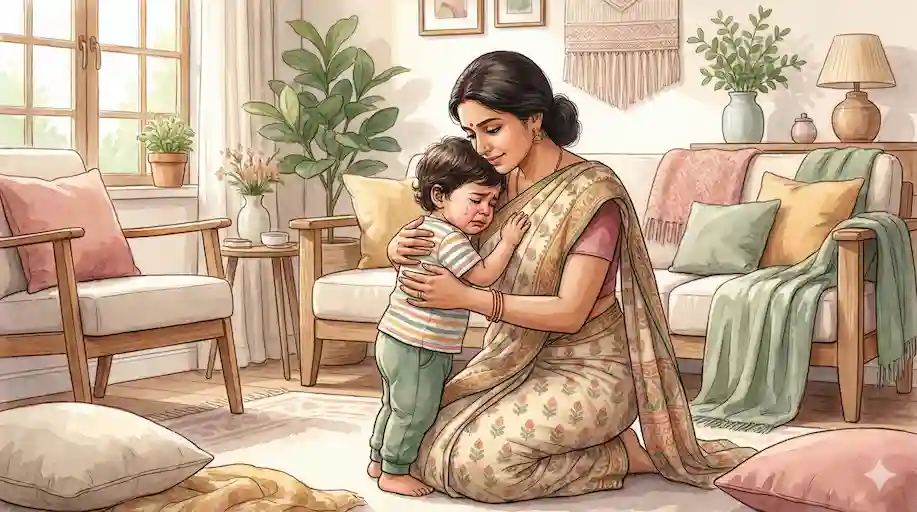
Note to Parents: Letting a child cry in your arms isn’t “spoiling” them. It’s supporting them.
How Parents Can Respond (Instead of Reacting)
How you respond to your child’s crying teaches them how to handle emotions as they grow.
Pause Before Correcting
Before saying anything, pause.
When you stay calm, it helps your child calm down, too.
You cannot calm a storm if you are a hurricane.
A calm parent helps their child become calm, too, though it takes time.
Name the Emotion
You don’t need solutions first.
You need understanding.
Say things like:
• “You look upset.”
• “That was frustrating, wasn’t it?”
• “I can see you’re sad.”
Naming emotions helps children feel understood and slowly learn how to talk about their feelings.
Offer Presence, Not Lectures
In moments of crying:
• Fewer words work better
• Gentle touch, eye contact, and silence are powerful.
Children calm down when they feel safe with you, not just from hearing explanations.
Set Gentle Boundaries
Empathy does not mean permissiveness.
You can say:
• “I know you’re upset, but we can’t hit.”
• “You’re allowed to cry, but we still need to leave.”
Setting kind limits teaches children to be strong emotionally, not afraid.
When Crying Feels Excessive
Sometimes crying may increase due to:
• Lack of sleep
• Hunger
• Too many activities
• Sudden routine changes.
Watch for patterns calmly before you start to worry.
If crying is:
• affecting their sleep or eating significantly.
• They seem inconsolable for very long periods.
• It happens alongside physical changes (loss of weight, lethargy).
Check the basics first: HALT (Hungry, Angry/Anxious, Lonely, Tired).
If your gut says something is off, seek professional guidance.
Taking these steps is not a weakness; it shows you are being a caring and proactive parent.
.
A Gentle Reminder for Parents
Your child cries because they trust you to help them.
They believe:
• You will listen
• You will protect
• You will help them feel safe
Crying does not mean you are failing as a parent.
It means your child sees you as their safe place.
Crying Is Not the Problem, It’s the Message
When you understand why kids cry so much, it becomes easier to stay calm instead of getting frustrated.
Instead of seeing a problem to fix, see a child asking for your help.
If you see crying as a sign of your child’s growth, it can change your perspective.
When we stop asking, “How do I stop the crying?”
and start asking, “What is my child trying to tell me?”
Children don’t need perfect parents.
They need present, patient, and emotionally available ones.
Understanding your child’s emotions today builds their emotional strength for tomorrow.